A compliance review is a fixed checklist run against a changing document. Jev answers the whole checklist in one request, returning a probability, a label or a rated level per item, so code can clear the clear-cut findings and send the borderline ones to a person.
Put one Jev request in front of an LLM and one behind it. Yes/no questions return the probability that each hazard holds, a Score rates how much harm complying would do, and your thresholds turn those numbers into pass, review, block, or a crisis path.
Run a rubric over the same document several times and compare the answers. The spread tells you which items sit safely away from a threshold and which ones wobble across it. TypeSafe documents that Jev does not guarantee structural identities between related questions, so code has to enforce those.
A semantic lint is a rule you can state in a sentence but cannot express in a regular linter. Jev turns each rule into a yes/no question over one diff hunk and returns a probability, so CI can comment on the likely violations and stay quiet about everything else.
The 1,978-point, 513-comment launch thread. The top comment calls the speed comparison misleading, since Jev only returns structured output, and disputes the cannot-hallucinate claim because a valid type can still hold a wrong value. Others note ordinary LLMs can already be forced into structured output.
Declares typed input/output Signatures for LLM modules and optimizes the underlying prompts and weights against a metric. Its Signature abstraction is the closest widely-used open equivalent of Jev's typed-question interface. Star count is GitHub's rounded display figure.
Guarantees valid structured output during generation by constraining decoding to a grammar or schema. The mechanism HN commenters repeatedly cited as already covering Jev's cannot-produce-a-type-error guarantee on ordinary LLMs. Star count is GitHub's rounded display figure.
Places Jev as a fast supervisor above slower Codex coding agents. Codex workers do the engineering while Foreman independently assesses whether the work is complete, requirements are met, tests suffice, or human input is needed.
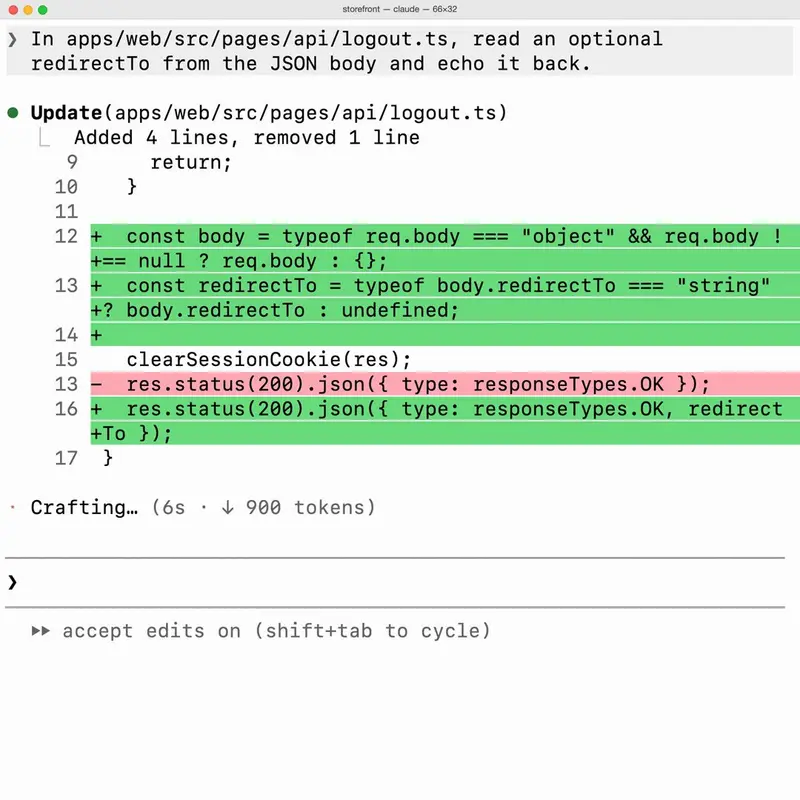
Local-first MCP plugin giving Claude Code, Codex, Cursor and OpenCode structured code-quality scores (correctness, complexity, modularity, security) while they work. Sends focused diffs to Jev and keeps keys and code local.
Open source tool that scores every turn a coding agent takes against project rules that can't be codified into a linter, using Jev, then tells the agent what to fix.
Extension making Jev the decision layer for the Pi coding agent: a measured tool-call gate plus a jev_ask tool. Judges whether an action is destructive, exfiltrates data or exceeds scope, then blocks or warns on calibrated thresholds.
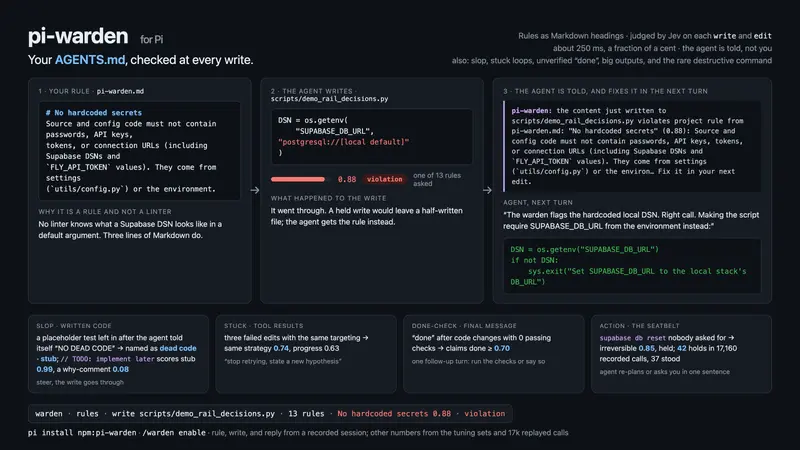
Guardrails for the Pi agent built on pi-typesafe. Jev judges irreversible and off-task tool calls, detects stuck loops, checks unverified completion claims and flags low-quality output, steering the agent rather than interrupting the user.
Command-line toolkit a coding agent can delegate judgment work to: ranking relevant files, checking a diff against its task and project rules, and triaging test failures or review comments. Each request runs one bounded typed workflow and returns a structured report.
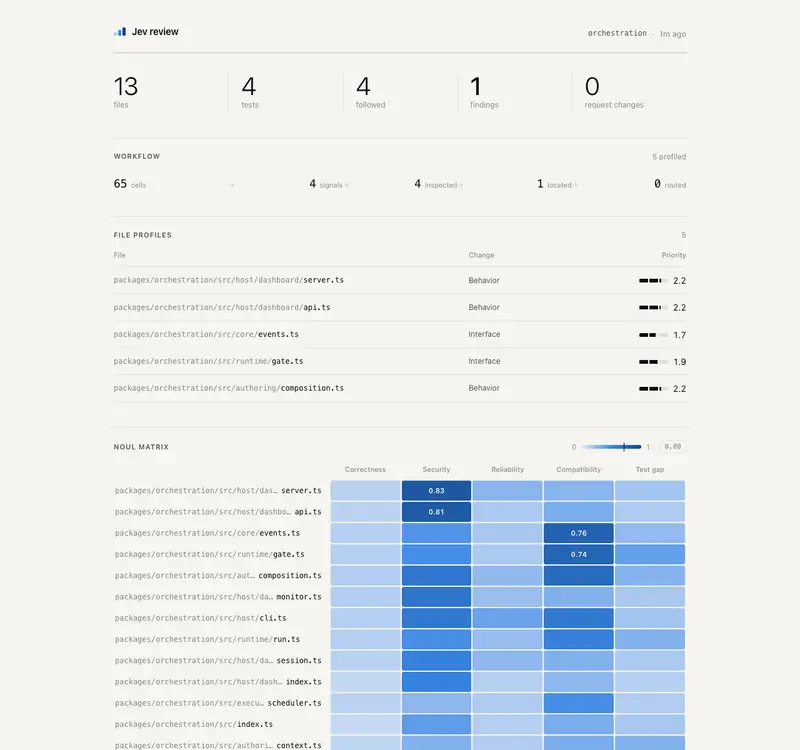
Scores source-file quality by asking Jev a set of yes/no questions, runs the test command you already use, and turns uncovered paths into small queries a coding agent can work through. Scoring costs about a cent per megabyte of source; coverage needs no account, config file or hosted service.
A Python evals and guardrails library for agent traces that uses Jev-style decision models instead of an LLM judge, running Jev through TypeSafe or Vercel, or Kev or Laya locally on a Mac. All checks for a trace go out as one request in a few hundred milliseconds.