Skip to content
System One

Jev browser and computer-use agents: 52 projects

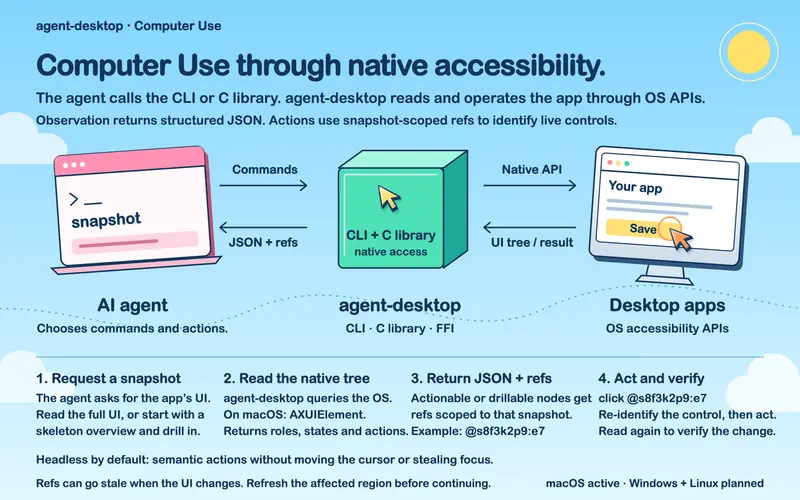
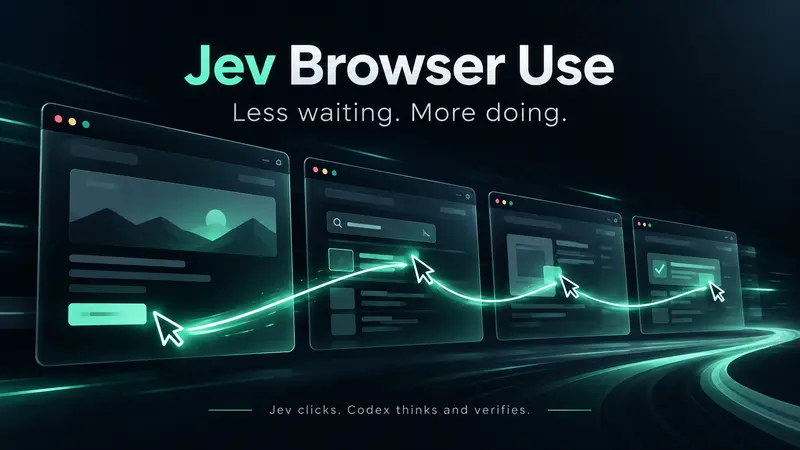
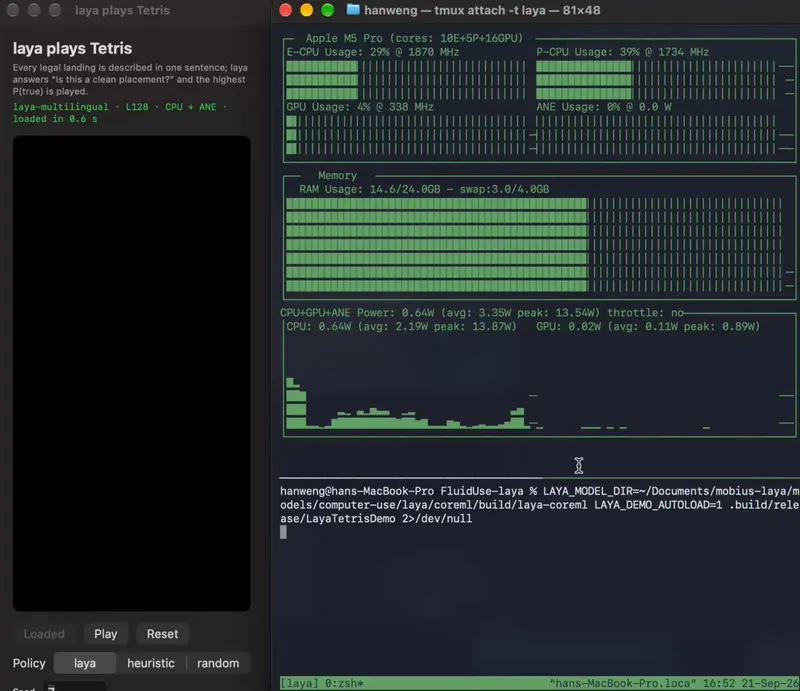
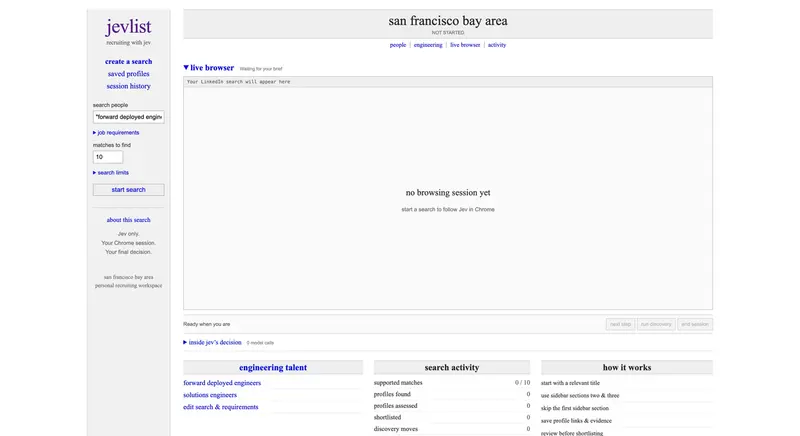
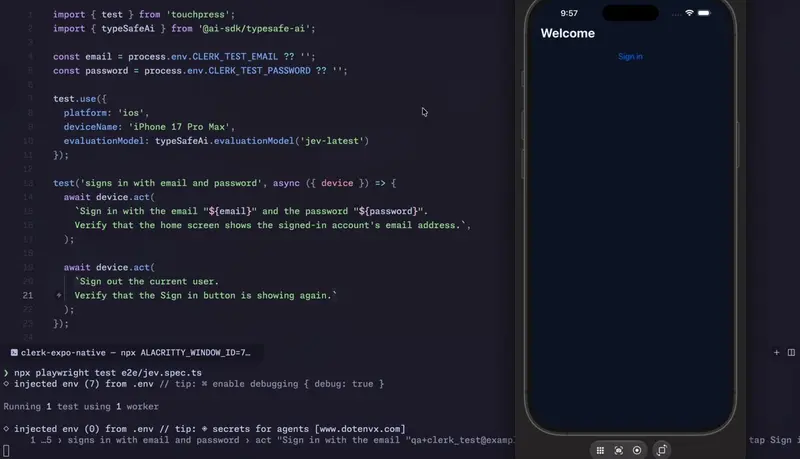
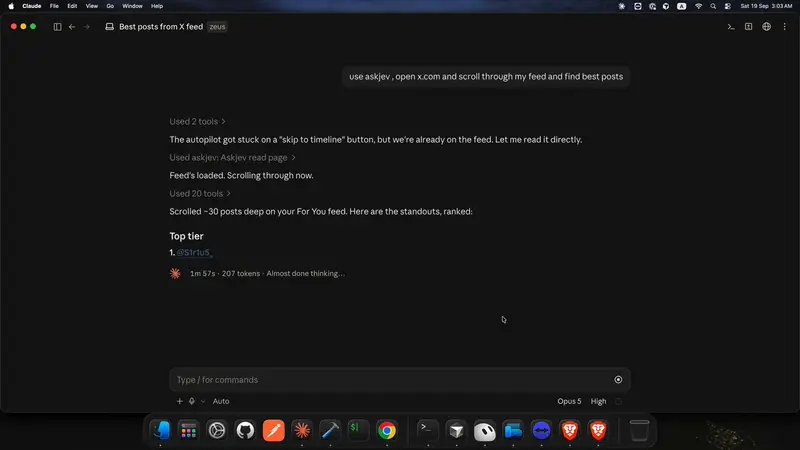
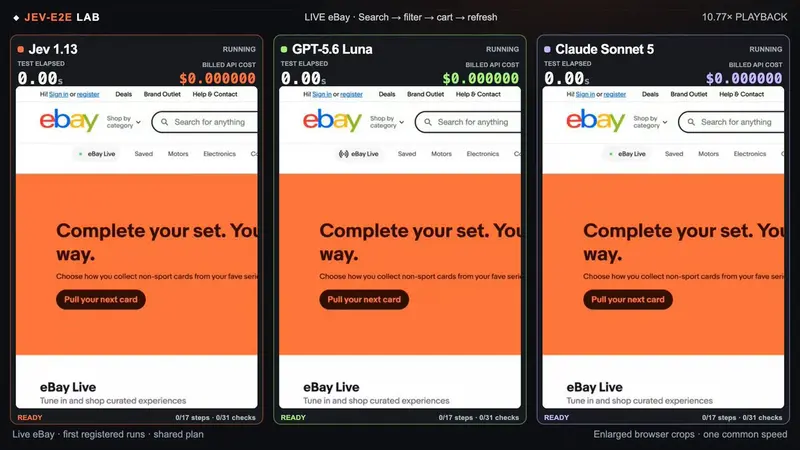
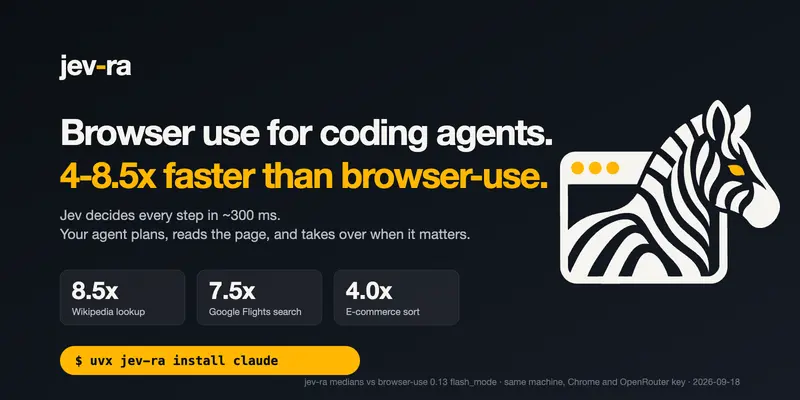
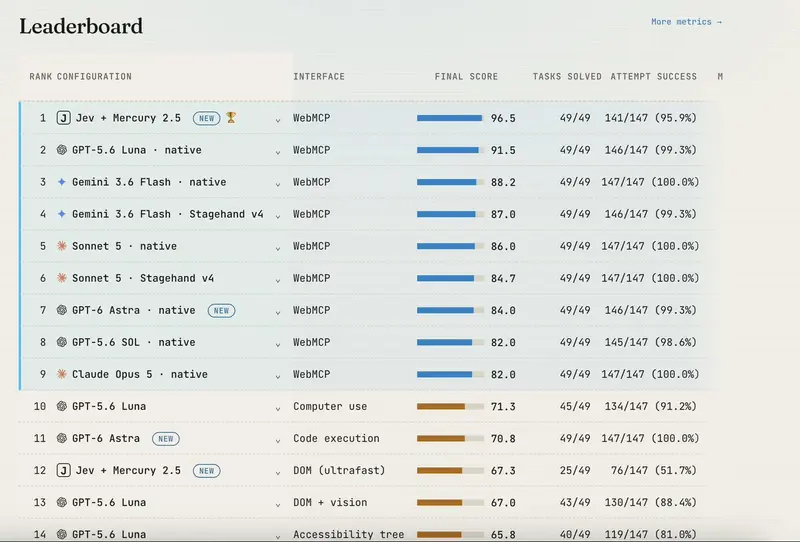
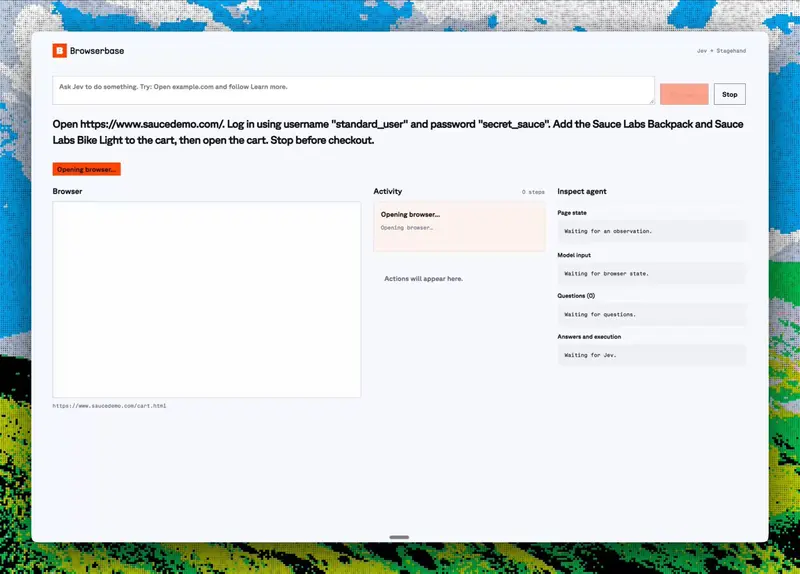
A browser agent clicks, types and navigates a real page to finish a task. Most of them run a loop: look at the page, pick one action, run it, look again. A decision model fits the picking step. It returns a typed choice, such as which element to click, along with a confidence value, so the loop can act on the answer without parsing text. The examples in this hub run on Jev and other decision models. Some drive a full browser, such as Jev Ultrafast from browser-use and Jevmaxxing from Notte. Others work at the desktop or phone level, such as FluidUse, which reads a form through the Accessibility API, and Friedjof/jev-mobile for Android. Several pair the decision model with a larger LLM that plans or writes text, so check which part of the loop each one hands to the decision model. Before you copy one, read how it describes the page to the model, what it does when confidence is low, and whether it logs or replays each step. Also check which browser or operating system it assumes and whether it needs a hosted key.

52 entries

All entries

Showing 1 to 48 of 52

How decision models are used for browser agents

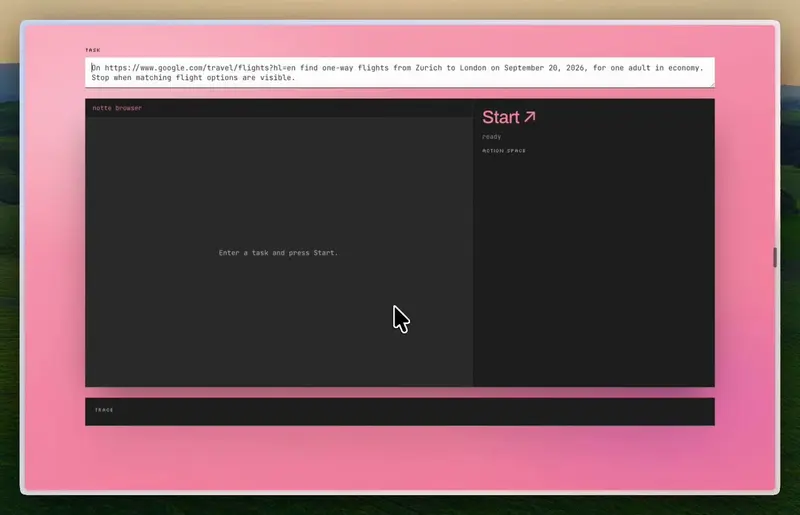
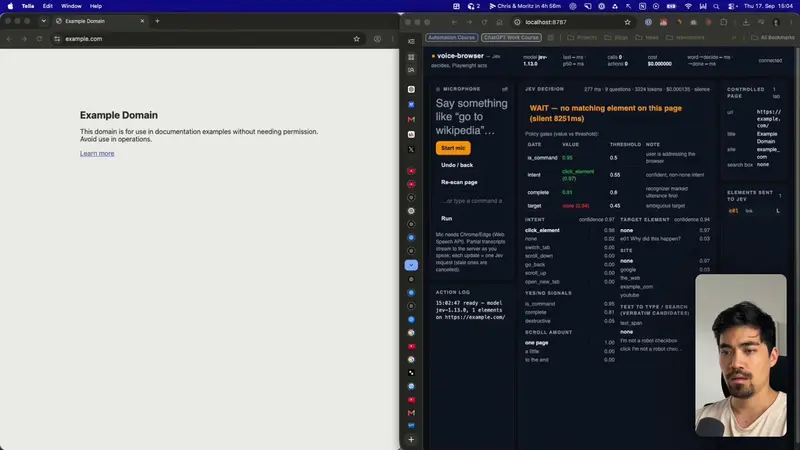
The usual loop has four steps. The agent reads a compact view of the page, such as a list of candidate actions or the accessibility tree. The decision model picks one candidate with a choice question. Code runs the action. The agent reads the page again. agent-labs-dev/fastbrowse builds the candidate list first, so the model cannot pick something that was never on the page. Jevmaxxing from Notte does the same against a cloud browser session and keeps a replay of every decision.


Choice is the main primitive. Score shows up when the agent ranks many candidates at once, and noul, a yes or no with a probability, fits checks such as whether a step worked. Most entries keep an LLM for planning or for writing text into fields. Jev Ultrafast from browser-use, for example, calls a small LLM only when typing is required. Check which of these each project relies on.

The known limit is the page view. The decision model only sees what you send it, so a poor summary of the page gives poor clicks. Commenters on the Hacker News thread about Jev Ultrafast also disputed how one of its timings was measured, because the clock started after the first page observation. Treat speed claims in these entries as the author's own.

FAQ

Can Jev drive a browser?


Yes. Entries such as Jev Ultrafast from browser-use and Jevmaxxing from Notte let Jev pick each click or action from a list of what is on the page. Code runs the action. Some projects still use a larger LLM for planning or for typing text, so Jev is usually one part of the agent.

Is a decision model better than an LLM for browser automation?

It depends on the step. A decision model suits the repeated pick-one-action step because it returns a typed choice with a confidence value. An LLM is still the better fit for planning and for writing text, which is why many entries use both.

What does a browser agent send to the decision model?

Usually a compact list of candidate actions or page elements plus the goal. The model replies with one choice. Check each project to see exactly what page content leaves your machine.