moritzkremb/jev-voice-browser on GitHub
- Stars
- 271
- Forks
- 39
- Language
- JavaScript
- License
- MIT
- Last push
- 21 Sep 2026
Read from GitHub on . Counts change daily.
Reported by the author
- Decision latency
- ~250-350 ms
gets typed probabilities back in ~250–350 ms
github.com - Cost per call
- ~$0.0002
Real API calls cost ~$0.0002 each.
github.com
Voice-browser lets someone control a real, headed Chromium window by talking to it, and act before they’ve finished the sentence. Speech is streamed word by word from the browser’s Web Speech API to a small Node server, and on every partial transcript, not just the finished sentence, the server sends Jev one request with about a dozen typed questions: what’s the intent, what element is the target, which site, is the command complete, is this even addressed to the assistant, is it destructive.
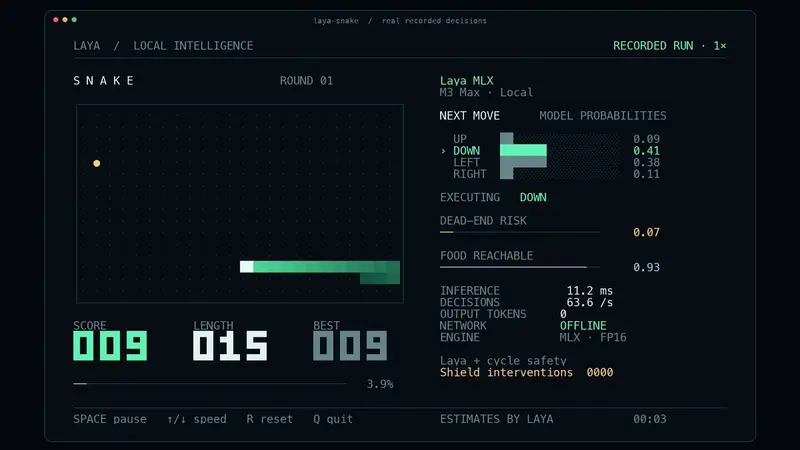
Jev returns typed probabilities for all of those in roughly 250 to 350 milliseconds, and code decides from there whether to act immediately, wait for more words, ask for clarification, or ignore the fragment. Jev never generates text itself: search queries, typed text, and URLs are extracted as candidate spans by ordinary code, and Jev’s job is only to pick which candidate is right, which is then copied verbatim rather than reworded. Real API calls cost about $0.0002 each. Destructive clicks need a spoken “confirm”. The controlled Chromium keeps a persistent profile, and the author warns against logging into accounts there that a misheard command could touch.
How it uses Jev
const { state, questions, candidates } = buildRequest(input);
const t0 = performance.now();
const { data, requestId } = await client
  .systemOne({ state, questions, model: MODEL }, { signal })
  .withResponse();
const latencyMs = Math.round(performance.now() - t0);