jev-trader
Makes one AI trade decision every Monad block on the Kuru MON-USDC market using Jev. The public deployment runs in dry-run mode with a mock model.
2.2k starsLoop, mock model p50 100 msDecision window ~300 ms/block
Trading projects ask a decision model for a call: bullish or bearish, buy or hold, how likely is this market to move. A decision model returns that as a typed choice or probability with a confidence value, and the surrounding code decides whether to act. That split matters here, because the model should not hold the money. The examples in this hub run on Jev and other decision models. Examples include jarrodwatts/jev-trader, which makes one decision per block on a Monad market, zadescoxp/Jev-Trades, a paper-trading dashboard, and TurboGuo/jev-fedspeech, which scores Federal Reserve press conferences from hawkish to dovish. Most are demos, backtests or paper trading. None of this is financial advice. Before you copy one, check whether it trades real money, how the backtest avoids using future data, what the risk limits are, and who wrote the strategy. Treat every number in these entries as a demo result, not a promise. A strategy that works in a backtest can fail with real fills, fees and slippage, and none of these entries remove that gap.
10 entries
Showing 10 of 10
Makes one AI trade decision every Monad block on the Kuru MON-USDC market using Jev. The public deployment runs in dry-run mode with a mock model.
2.2k starsLoop, mock model p50 100 msDecision window ~300 ms/block

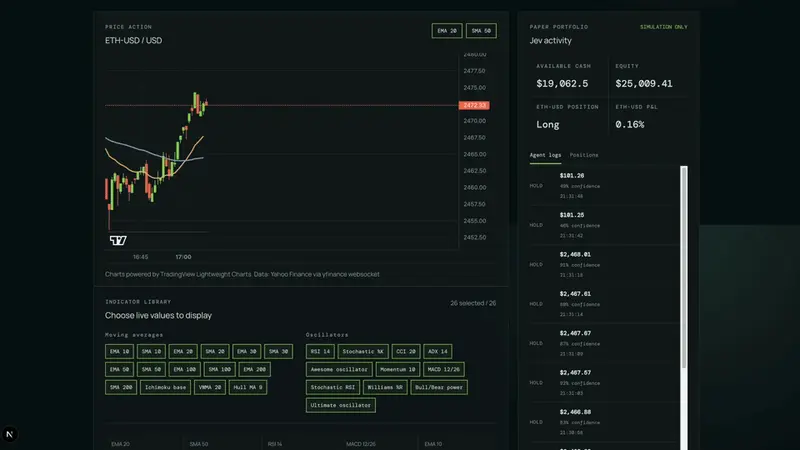
A Next.js dashboard that streams one-minute crypto candles from Yahoo Finance and applies TypeSafe decisions to a simulated paper-trading portfolio, gated by a confidence threshold per risk profile. No live broker or order API is connected.

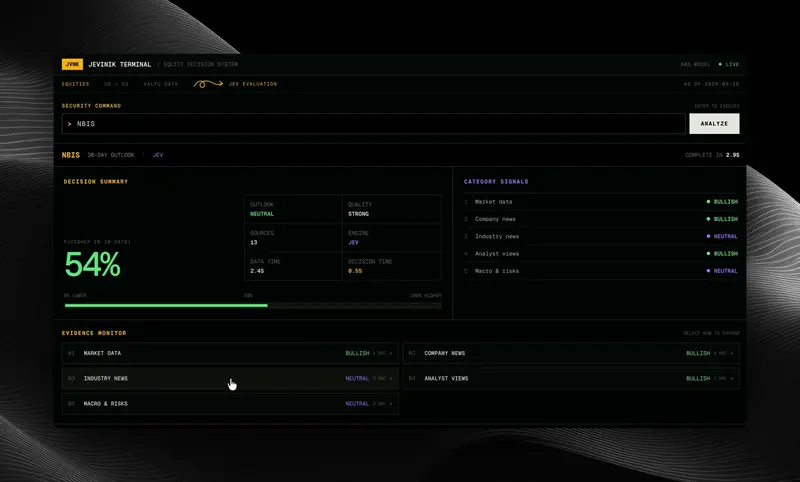
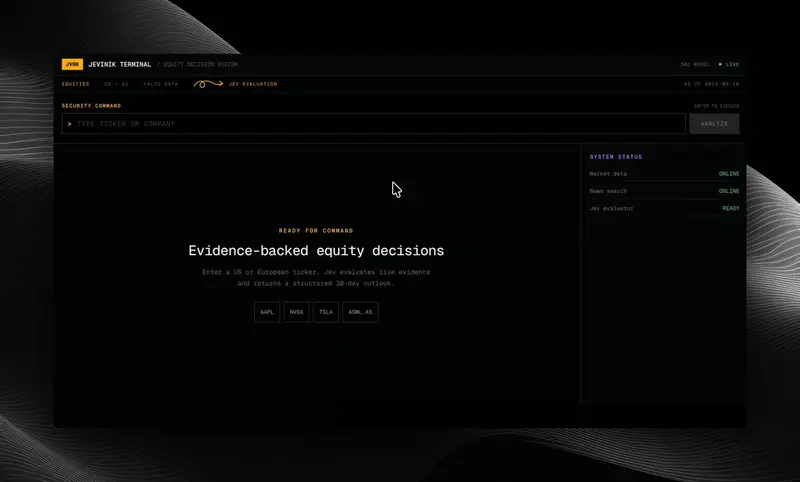
A stock decision terminal, self-titled Jevinik: it pulls live market evidence through Valyu and uses Jev to estimate the probability a stock trades higher in 30 days, without calling a general-purpose LLM.
A live market news desk that takes yfinance headlines and returns ranked trade ideas, running 215 typed judgments through Jev per pass in 2.7 seconds for about a quarter of a cent. Built with Claude Code and TypeSafe's agent skill.
Scores Federal Reserve press conferences hawkish to dovish in real time: Jev rates every word the Chair says in about 150 milliseconds, side by side with a chat model scoring each caption line.

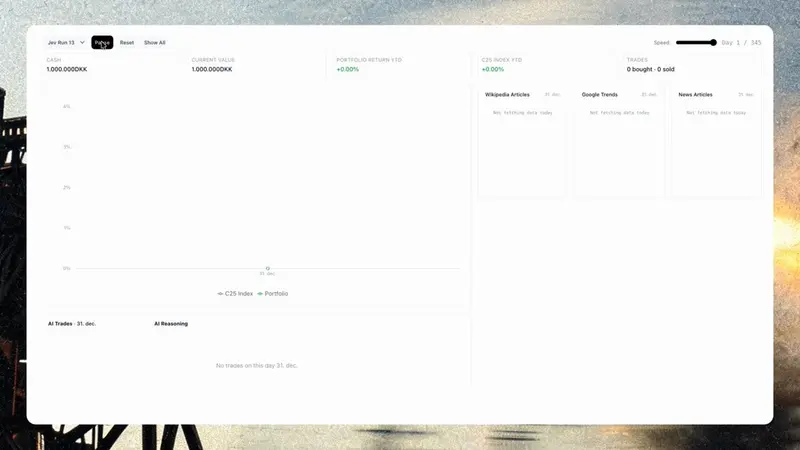
A video demo backtests Jev trading the Danish stock market across all 239 trading days of 2025, using sentiment derived from market data, news articles, Wikipedia, and Google Trends, at a cost of 8.1 million tokens for $0.32.
125k viewsToken cost 8.1M tok, $0.32

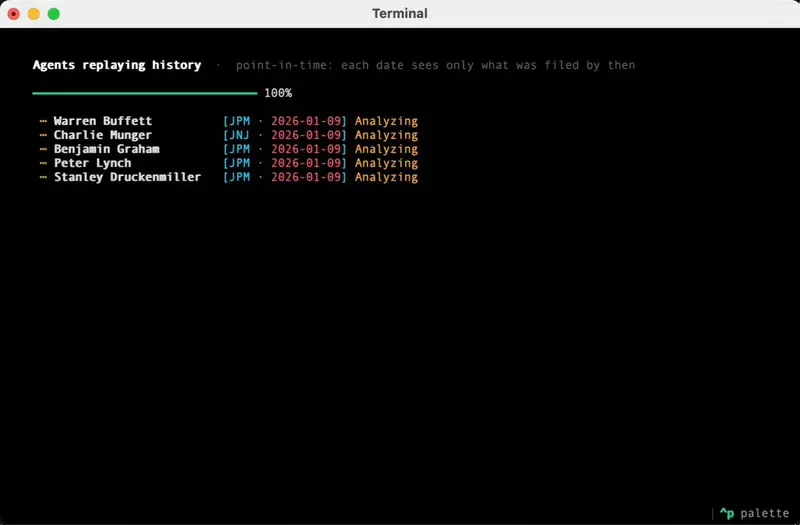
A video demo adds Jev to the AI Hedge Fund project, using it to backtest trading decisions after setting a strategy and picking tickers, running the process in seconds rather than minutes.
91k viewsSpeed 100x faster

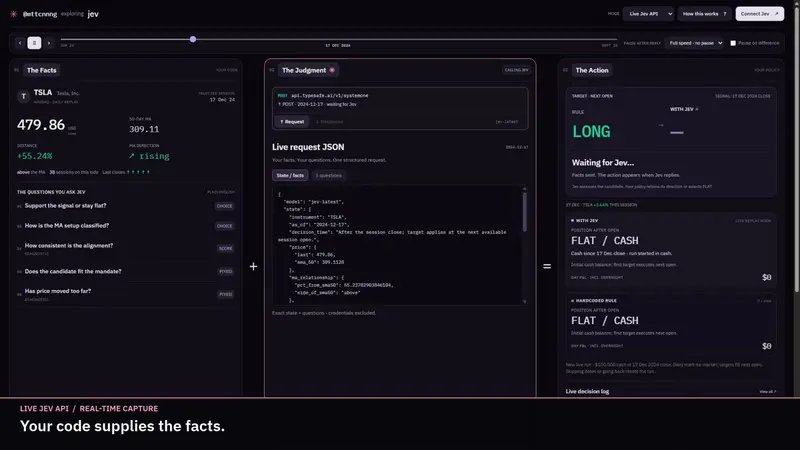
A video demo of a TSLA 50-day moving-average trading rule with Jev in the judgment layer: real API calls return typed answers, and the author's code decides the action from there.

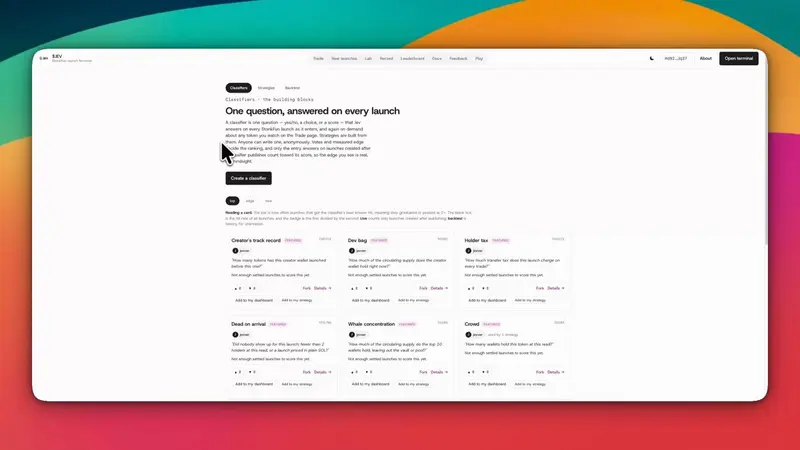
A live trading site where Jev re-reads a Solana token every 5 seconds for its call, dump risk and buyer control. Users write their own yes-or-no, choice or score classifiers, combine up to six into a strategy, and backtest or run it live against every new launch.

Pulls market data, signals, risk and filings for a stock and has Jev call the next 30 days bullish or bearish, without an LLM in the loop.
Nothing matches those filters
Clear a filter to widen the search, or send us the thing you were looking for.
The loop is: collect evidence, ask the model for a typed call, and let code size and place the order. unicodeveloper/jevocks pulls live market evidence through Valyu and has Jev estimate the probability a stock trades higher over the next 30 days. A typed trading-rule experiment by Matt keeps a moving-average rule in code and uses Jev only as the judgment layer.
Score and choice cover most calls. Noul covers checks such as dump risk. Jev on Sol by Cryptonaire re-reads a token on a short timer and lets users write their own yes or no, choice or score questions. research_desk by Nairb turns market headlines into ranked trade ideas. Writing your own questions is where most of the work lies, since the answer is only as useful as the question behind it.
Backtests are the weak point. The Danish stock-market backtest and the AI Hedge Fund demo run in seconds, which makes it cheap to try many setups and easy to overfit to one. Several entries gate trades on a confidence threshold or run in dry-run mode, as the public deployment of jev-trader does. Begin in one of those modes. Paper mode costs nothing and shows how often the call changes.
Projects here connect Jev to paper-trading portfolios, backtests and a few live crypto setups. The model returns a call and code places the order. These are experiments, not advice, and most run in dry-run or paper mode.
Yes. TurboGuo/jev-fedspeech scores press conferences from hawkish to dovish word by word, and research_desk ranks trade ideas from headlines. Both turn text into typed scores that code can use.