How decision models are used for social feeds
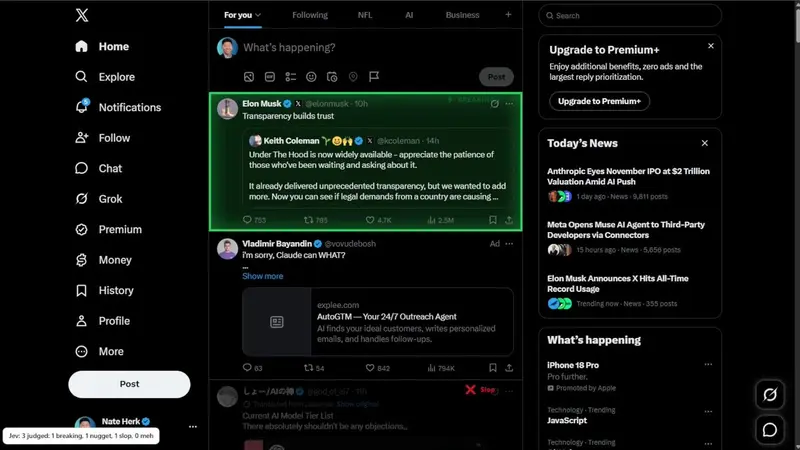
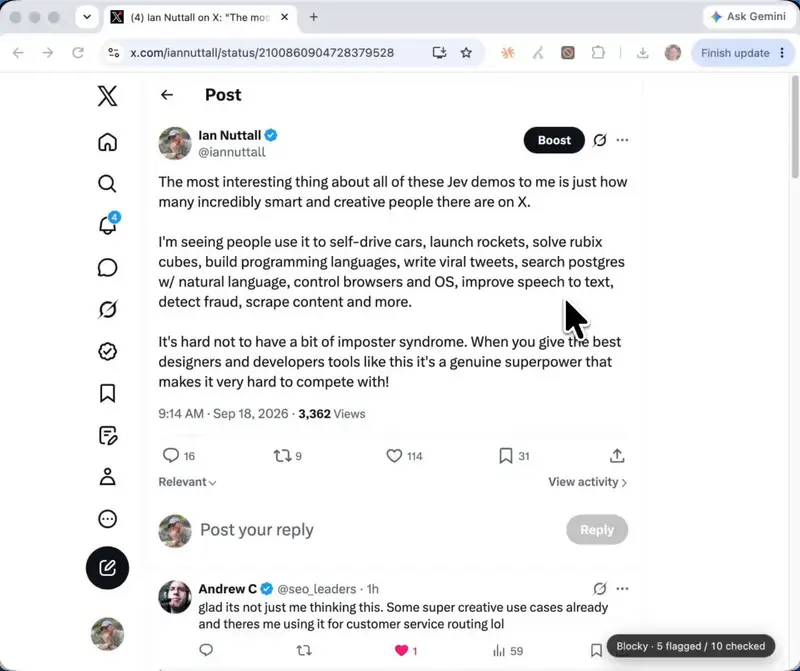
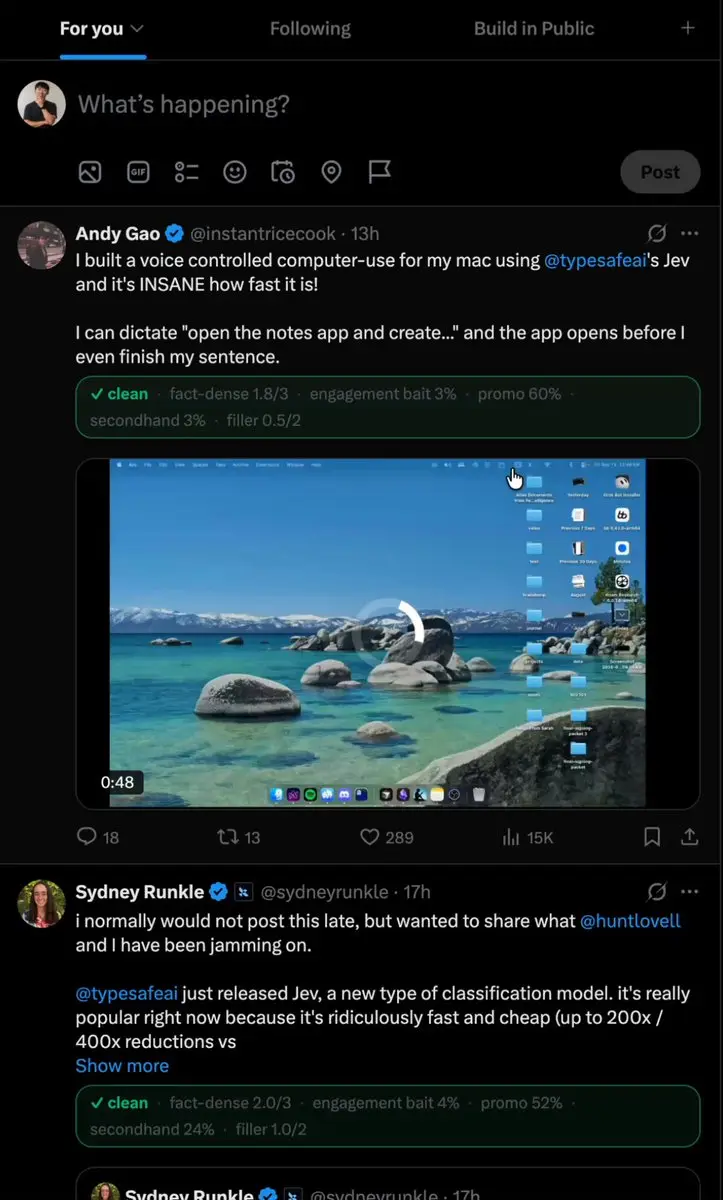
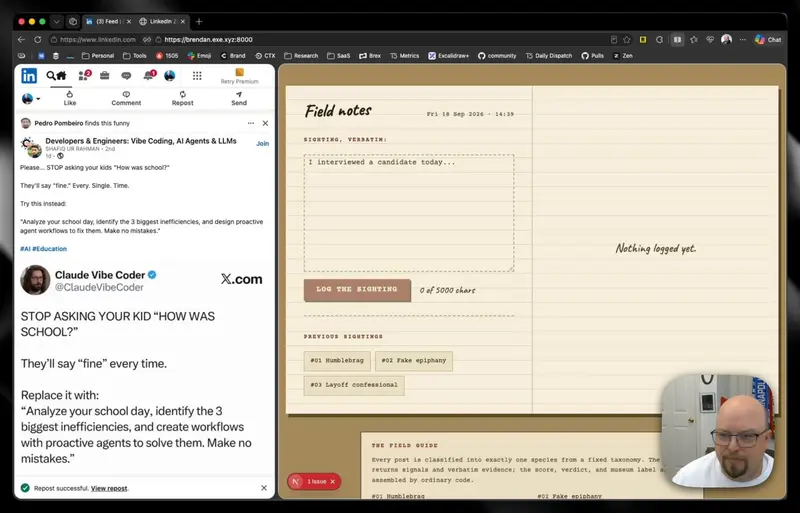
A feed filter hooks into the page, collects the visible post text, and sends each post to the decision model with a rubric. sushrutb17/linkedin-noslop-extension sends LinkedIn posts with narrow yes or no and rating questions, then blurs the ones scored as low value. LinkedIn Zoo by Brendan O'Leary uses a choice among eleven species instead, which makes it a label, not a filter.
Choice labels, noul flags and score ranks. Showing a score keeps the final call with the reader. Slop Finder by Code-Wizard-Wilson uses a local Laya helper for detection. Others call a hosted API with your own key, so check where the text goes. Choose the primitive by the action: a flag for hide or blur, a label for sorting, a score for ranking. Run the first week in a mode that only marks posts.
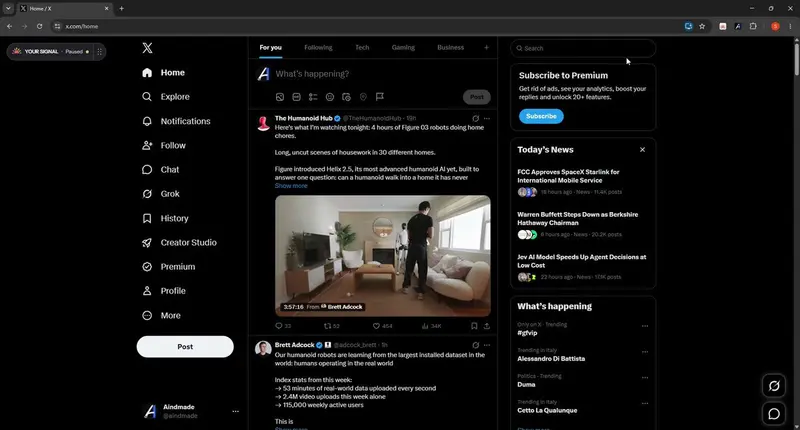
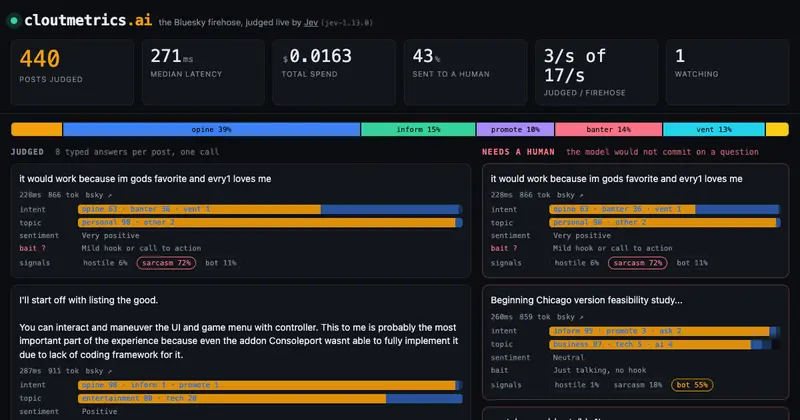
The limit is the rule itself. Words like slop or bait mean different things to different people, and a filter can hide a post you wanted. Entries that keep the action reversible, like Your Signal, or send unsure calls to a human review lane, like ragelink/firehose-judge, handle that better than ones that delete. Ask who maintains the rubric, since it decides what gets hidden.
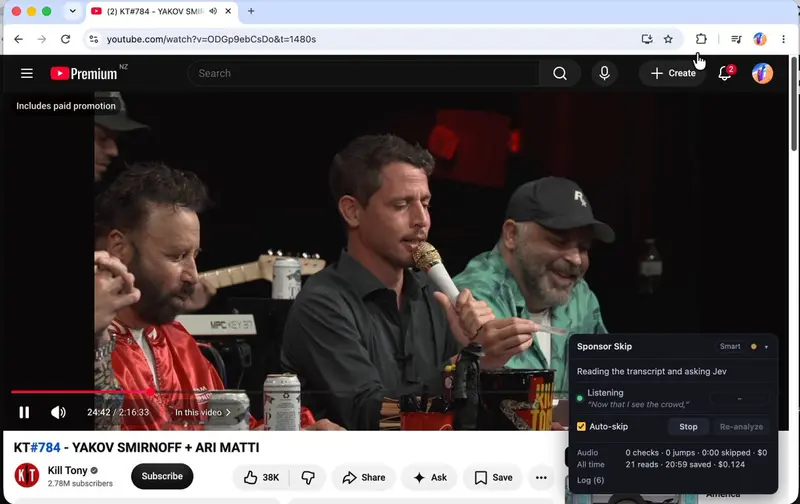
 Tony Dinh (@tdinh_me)Opentrungdq88/youtube-sponsor-detection on github.com