Unclutter: a Jev browser extension that hides clutter
Unclutter is a WXT browser extension that removes page clutter using Jev decisions, with reusable template rules per site.

Project
Some of the most useful examples are small apps. A decision model sits behind a feature and answers one narrow question: is this file an invoice, is this the command you meant, is this user stuck? Because the answer is typed and comes with a confidence value, the app can act on it in code, show a suggestion, or stay quiet. The examples in this hub run on Jev and other decision models, and Laya appears in some. Examples include mrnugget/jev-shell-history, which ranks zsh history entries as you type, acorn181/semantic-bookmark, which files bookmarks into folders, and Jevform by Tamir, a form that chooses its next question. Many are macOS tools or browser extensions built by one person. Before you copy one, check what data the app sends out, whether actions can be undone, how it behaves when confidence is low, and whether it needs your own API key. Most of them are weekend-sized, which makes them easy to read and adapt.
26 entries
Showing 26 of 26
Unclutter is a WXT browser extension that removes page clutter using Jev decisions, with reusable template rules per site.

Fish-style autosuggestions for zsh ranked by Jev. As you type, the plugin sends your last 100 distinct history entries and asks which one you are most likely completing, then shows the best match in grey with its score for you to accept.
Chrome extension that finds ad-shaped DOM elements in plain code, then asks Jev whether each candidate is an ad and pops it off the page. Bring your own key and there is no backend, and the author calls it a fun side project rather than a real ad blocker.
A console whose whole design system is generated at runtime by Jev from a one-sentence brief.
A macOS menu bar app that turns one typed or dictated sentence, in English or Japanese, into an Ableton Live action, using Jev to interpret the command.

A private Mac voice diary that transcribes locally, uses Jev to sort each entry, and saves them to a Notion library.

A voice-driven control layer for macOS with a Rust core and Tauri shell, where Jev is a fallback rather than the main router.
A Chrome extension that files bookmarks into folders using semantic rules you write, matched by Jev.
Emoji autocomplete that makes one Jev call per pause in typing: a Choice over up to 254 emojis, a Choice over eight emotions, three Scores and three booleans, answered in parallel in about 100 ms of model time per the README. TanStack Start on Cloudflare Workers through the AI SDK typesafe-ai provider, hosted on Whop, with a live demo at emoji-jev.whop.site.

Fish-style zsh history autosuggestions ranked by an AI model instead of prefix matching, with Jev as one of four supported providers.
A live tone checker that scores a draft message with Laya as you type: a choice question for tone, a score question for formality, and a noul question for fight risk, answered in 40 to 110 ms per check.
 roisol144OpenBefore You Send on github.com
A native macOS utility that has Jev recommend which stale listening ports are safe to stop, with the evidence shown and nothing closed automatically.
 epiphany-dynamicsOpenepiphany-dynamics/port-cleanup on github.com
An Android system-wide overlay that reads on-screen text through an AccessibilityService, sends it to Jev, and shows a floating badge when a manipulative interface pattern looks likely, skipping password and card entry screens.
 zohaib-mdOpenzohaib-md/UXRay on github.com
A video demo pairs json-render with Jev to render generative UI components in milliseconds, using the viewer's own components, actions, and design system.
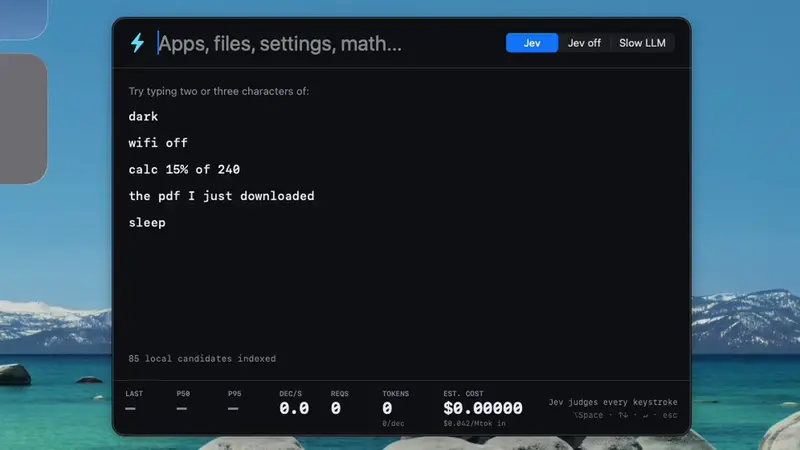
Demos a launcher that ranks results by alias, fuzzy match and habit; Jev reads typed intent so a query like 'the pdf I just downloaded' puts the newest matching file on top within about 100 ms.
 nader dabit (@dabit3)OpenA predictive launcher powered by Jev (X) on x.com
429k viewsResponse time ~100 ms
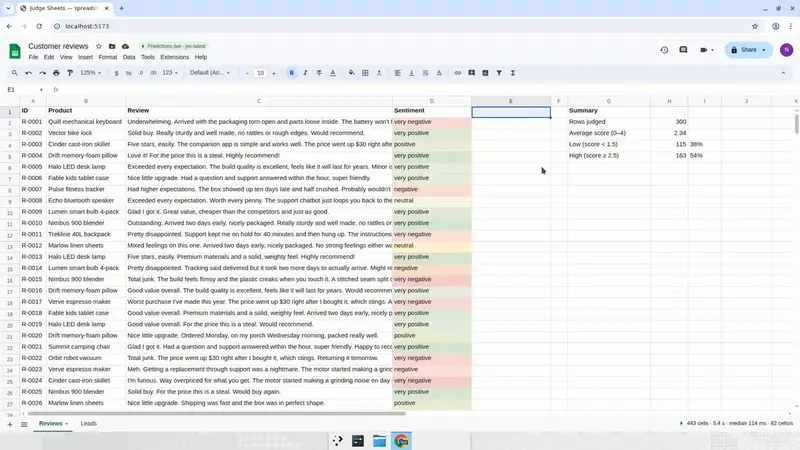
A video demo of predictive spreadsheets where typing a column header such as Urgency prompts Jev to rate each row on a scale from no follow-up needed to urgent in about 100 milliseconds.
 nader dabit (@dabit3)OpenSpreadsheets that read intent (X) on x.com
276k viewsResponse time ~100 ms
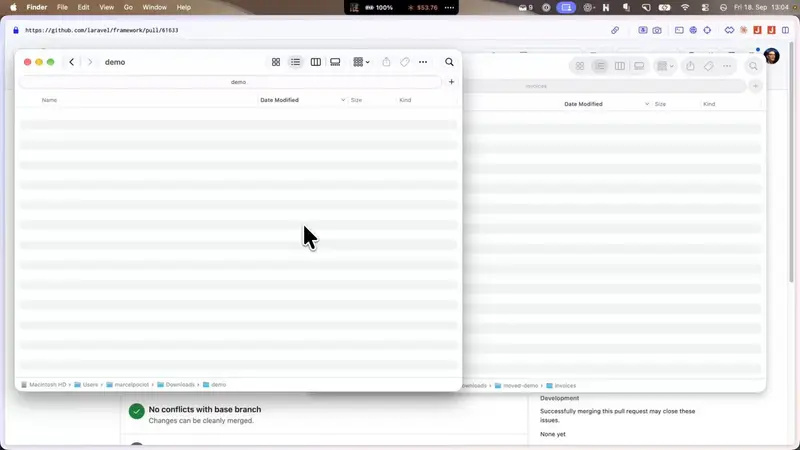
A video demo of a macOS app that monitors the Downloads folder with Jev: it checks whether a downloaded file is an invoice, then moves matching files into a folder with a corrected filename, using no other LLM calls.
A video demo of Jev picking the next shell command to run based on shell history.

A video demo of a calorie-tracking app kitze built with Jev.
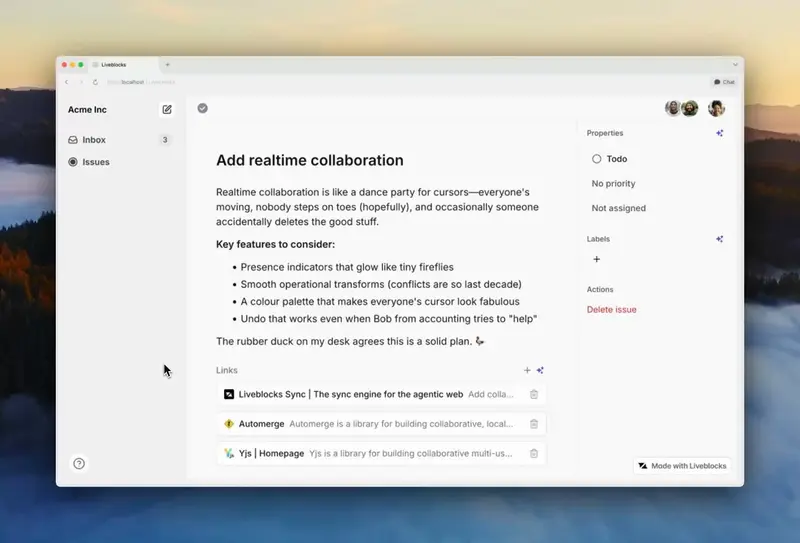
A video demo shows background auto-fill buttons built with Jev integrated directly into an app's UI, contrasted with slower LLM-based alternatives.

A Clippy-style assistant that watches product usage and only appears when Jev judges the user is hesitating, confused or stuck; Jev also drives its reactions.
A video demo of an app that monitors the macOS clipboard with Jev, detecting when the copied content is a terminal command and offering a quick action to run it.
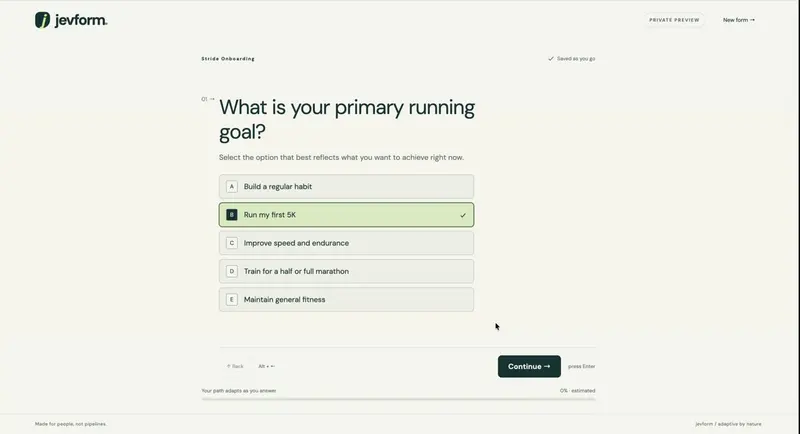
A form that uses Jev to branch dynamically and choose the next question instead of hard-coded if-then logic, built on Vercel's json-render for the UI and XState for the form's state.

A speech-practice tool where you talk about a given topic for 30 seconds and Jev analyzes pauses, filler words, repetitions, confidence and clarity, then returns a score and feedback.
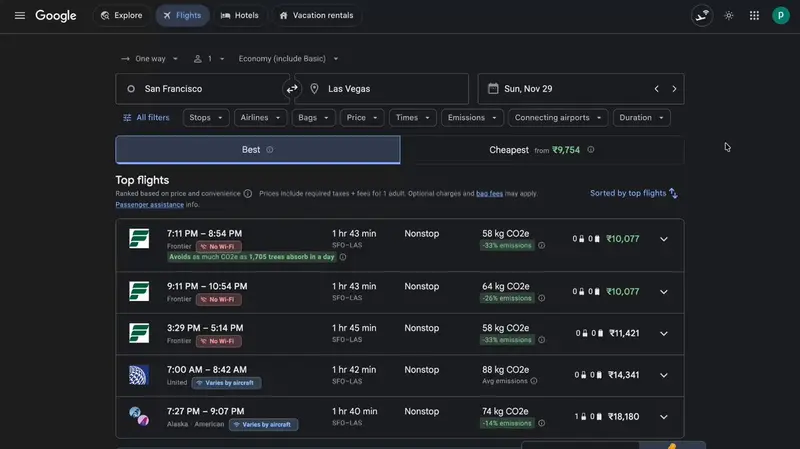
A Chrome extension built with Jev that checks a flight's wifi automatically, classifying whether it supports video calls, email or nothing at all, and whether it runs on Starlink or older wifi, shown directly on Google Flights.
A side project that scores a project idea using only Jev Score questions, with no generative model in the loop.
Nothing matches those filters
Clear a filter to widen the search, or send us the thing you were looking for.
App features call the model when a user pauses or a file arrives. colinmcdermott/emoji-jev makes one call per pause in typing. The downloads organizer demo by Marcel Pociot checks whether a new file is an invoice and files it. The common shape is an event, one batched call and a small action. Debouncing, meaning waiting for a pause before calling, keeps the number of calls down.
Choice picks a category or option, score rates a draft, and noul answers yes or no. Before You Send by roisol144 uses all three with Laya: a choice for tone, a score for formality and a noul for fight risk, shown as you type. Small apps rarely need all three. Most pick one primitive and build the interface around it, so start with the one that matches the decision your user is making.
The risk is acting too eagerly. epiphany-dynamics/port-cleanup shows the safer pattern: Jev recommends which stale ports are safe to stop, the app shows the evidence, and nothing closes automatically. Keep the person in control of anything hard to undo. Add an undo for anything the model can trigger, and show the confidence value or the reason when it matters. A suggestion that explains itself is easier to accept or reject.
The entries here include shell autosuggestions, bookmark filing, emoji autocomplete, form branching, file organizers and writing checkers. Each asks one narrow typed question at the moment a feature needs it.
Yes. Instant generative UI pairs json-render with Jev to pick components, and Jevform chooses the next question in a form. The model returns a choice and the app renders it from your own components.


