nozomi-koborinai/jev-spec
Checks your code against Markdown specs on every commit by asking Jev one focused question per requirement and comparing the returned probability with a threshold you set, failing the build on drift.
Entries 193 to 240 of 638, in the hub's default order. The introduction is on page 1.
Showing 193 to 240 of 638
Checks your code against Markdown specs on every commit by asking Jev one focused question per requirement and comparing the returned probability with a threshold you set, failing the build on drift.
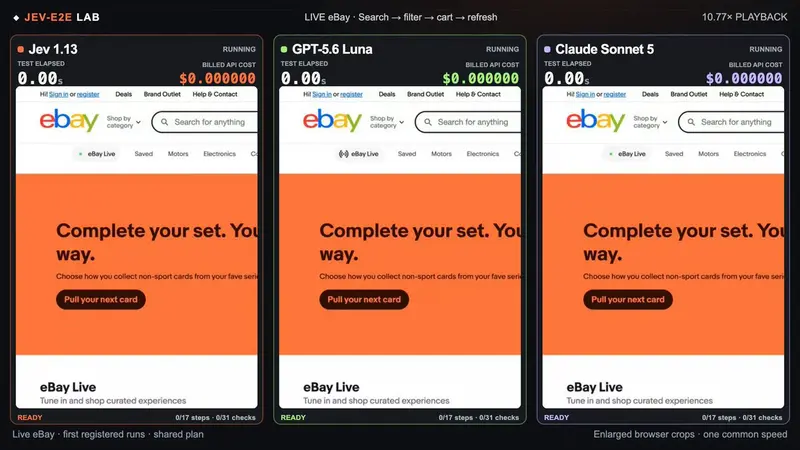
Turns a plain-English description of a web flow into a Playwright end-to-end test that Jev drives, with evidence for each result. The poster's eBay benchmark: 47 seconds and $0.0067 with Jev, versus $0.0277 and $0.4062 for two LLM alternatives.
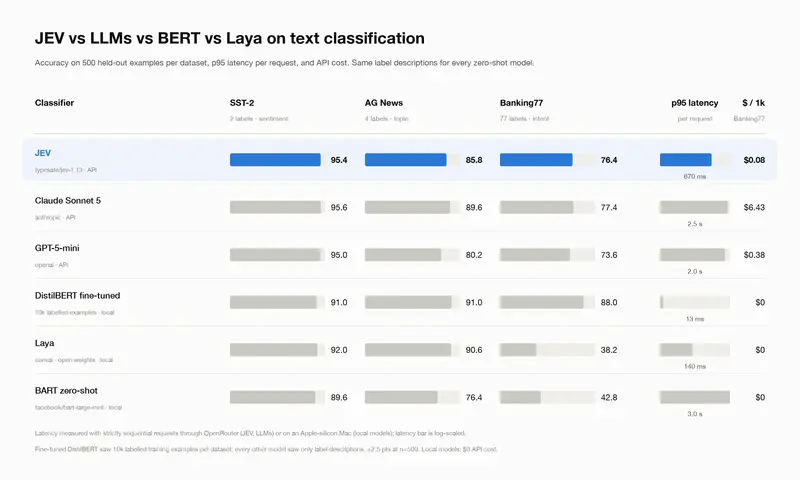
A reproducible benchmark running Jev, Laya and four other classifiers over three public datasets, reporting accuracy, calibration, latency, throughput and cost side by side. Jev answers one choice question per example through the Decisions API.
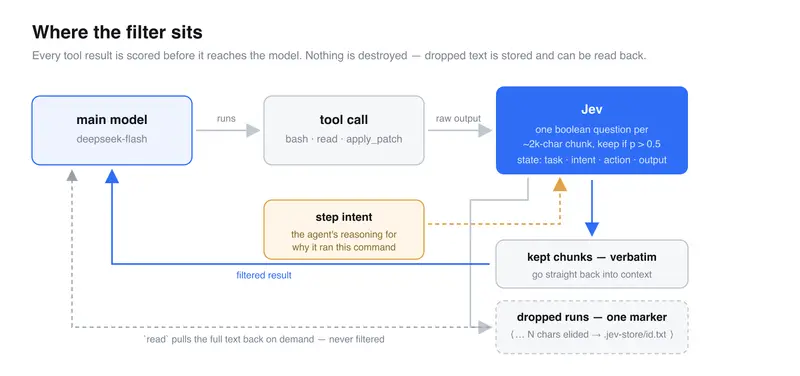
Filters every tool result through Jev before the coding model reads it, with an A/B harness that measures pass@1 and cost against an unfiltered control.
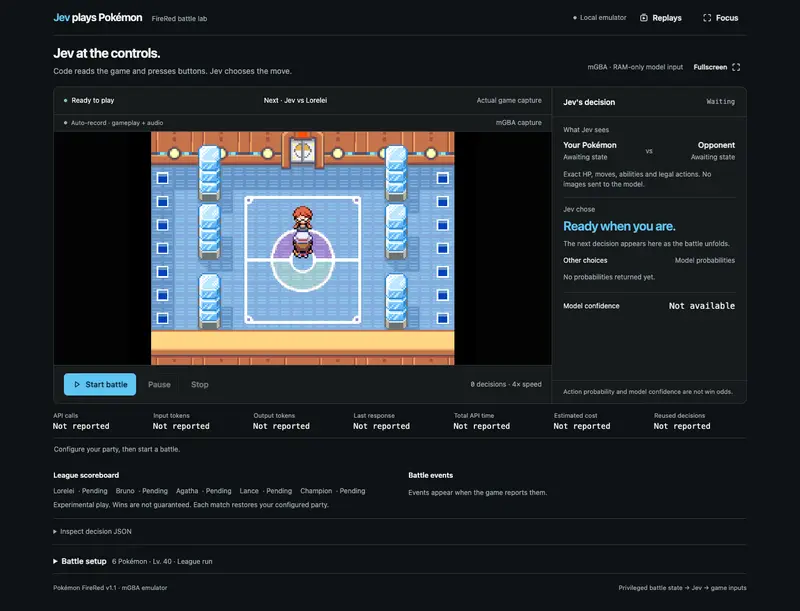
Jev plays Generation 3 Pokemon through Showdown and a real FireRed ROM, with no screenshots involved. Each turn the host reads the battle out of RAM and hands Jev the legal moves and switches; the author points a deliberately underlevelled party at the Elite Four.
Grades the sections of a web page for clarity, writing and on-page SEO with Jev, returning a score per section. Built as a browser extension with WXT.
Autonomous Pokemon Red agent on a PyBoy emulator. Jev reads a compact text snapshot of the game state, answers parallel yes/no questions each turn, and deterministic code turns the answers into button presses. Jev has no vision and no history, so the harness holds the short-term memory.
Recursive tournament engine that ranks texts such as poems, startup pitches and cold emails using Jev for pairwise judgments, Elo rating mechanics and Swiss matchmaking, with real-time WebSocket streaming.
Reproducible comparison of Jev and Claude Haiku 4.5 on 2,000 phishing emails, asking whether an email agent should click the link. Haiku wins on accuracy, 81.3% against 62.6%, while Jev is faster and cheaper, and a logistic regression over Jev's five signal questions reaches 95.1%.
Independent Rust SDK with async and blocking clients, typed Noul/Choice/Score questions, model discovery, configurable retries and cancellation. Published to crates.io as typesafe-ai-rs.
Benchmark that tests whether models can forecast federal motion-to-dismiss rulings from the judge's written record, scored with claim-defendant micro-Brier metrics and clustered intervals. Ships a Jev integration under integrations/jev alongside the frontier-model workflows.
Toy archipelago where Jev makes every in-flight call: divert or continue, declare an emergency, give way, hold, and who lands first when two aircraft want the same runway. Each aircraft knows only itself and nearby traffic, asks four batched questions about every 1.6 s, and gets answers in roughly 150 ms.
Elixir SDK for the TypeSafe AI API, bringing Choice, Score and Noul decisions into OTP processes and GenServers. Published on Hex as typesafe_sdk.
Community Go SDK for the TypeSafe AI Jev / System One API.
A pi agent extension that curates the context sent to the LLM before each call, using a one-question-per-unit Jev judgment to decide which prior messages are still needed.
Runs Laya and Jev on 751 byte-identical questions across nine suites; Jev sweeps triage, guardrails and moderation, Laya wins agnews and mnli, and both miscalibrate on emotion.

Browser automation for coding agents that the author reports as 3 to 5 times faster than browser-use, with Jev deciding each step in about 300ms.
CLI that lints UI code, copy, and agent instructions for AI slop on every commit. Local rules handle the measurable checks; the judgement calls go to Jev as yes/no questions that come back as probabilities, and a set of rules can fail the run.
Labels GitHub pull requests using Jev's typed decisions, sizing changes by conceptual scope rather than lines changed.
Public HTTP gate running as a Neon Function: Jev inspects the request body, then optionally forwards the same bytes to a caller-chosen HTTPS URL. Endpoints cover prompt injections, unsafe images and unsafe replies, with a companion demo site at safer-with-jev.com.
Scala 3 and ZIO client for the Jev System One API, typed end to end with no raw JSON. Several questions go out in one round trip as a NamedTuple and come back keyed the same way, and illegal states are unrepresentable: criteria cannot be built out of range and every probability is provably within 0 to 1.
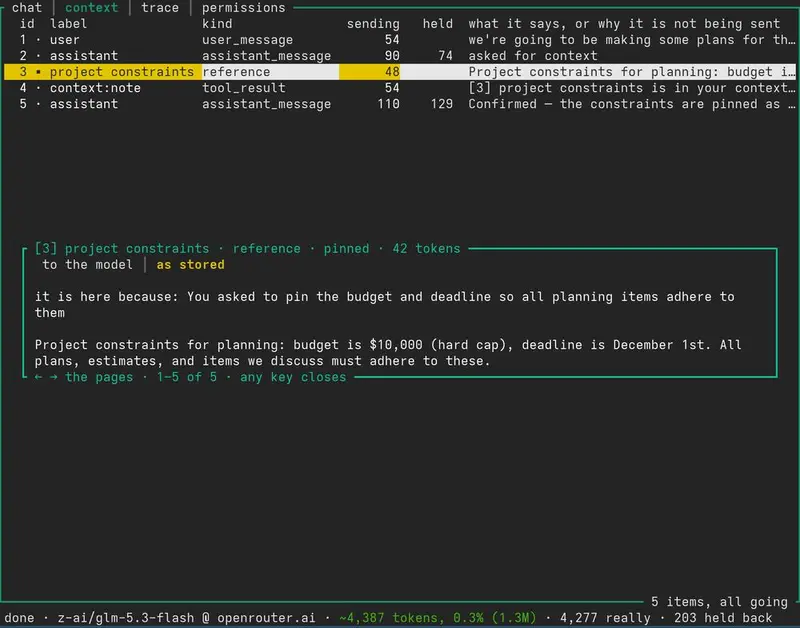
Agent runtime in Rust where the context, tools, permissions and requests are explicit state you can read, change and put back, plus an MCP bridge and the kamchatka terminal agent. The linked example uses Jev for content-aware compaction in that agent.
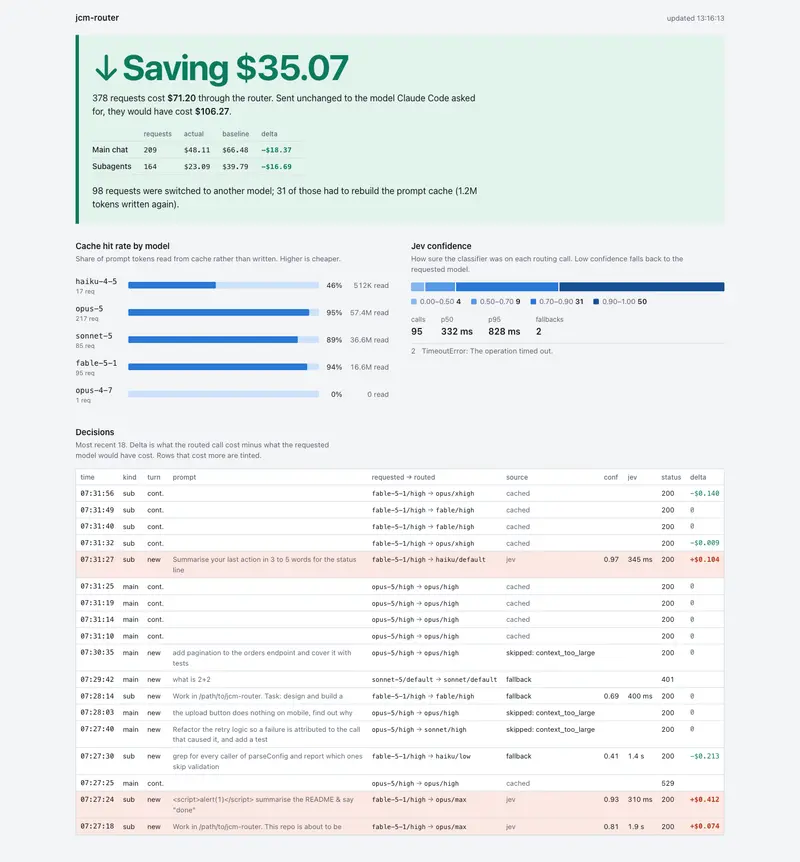
Local proxy between Claude Code and the Anthropic API that picks the model and effort level per message with a Jev decision. The author measured that routing subagents saves money while routing an established main chat loses it: 309 logged requests cost $106.73 against an $87.19 baseline, and $17.12 of the $19.53 loss came from the main chat alone.
A local-first test selector that asks one semantic relevance judgment per test to decide which e2e tests a code change can safely skip, failing open to the full suite on low confidence. Judge is pluggable between classifier.dev, Jev over HTTP, or self-hosted Laya via ONNX Runtime. Ships a bundled GitHub Action.
Proof of concept that turns a high-level Android goal into a bounded observe, stabilize, decide, act loop. Jev receives a compact semantic UI state and a short list of already-valid actions, and never generates coordinates, MCP calls or code. Exercised against Android Settings on a real device.
Go client for TypeSafe's System One API, returning typed judgments and calibrated probabilities instead of generated text. Questions are built in Go and answers are read back as Noul or Score values.
Lets a person or coding agent ask a plain-English question across a repository. Hunch sends each in-scope chunk to Jev and returns scored source locations, without needing to guess which words the code uses.

A Codex plugin that asks Jev which bulky tool results a session still needs, then replaces the rest with a bounded head and a one-line note, so long sessions don't resend stale output on every turn.
Hands Jev a piano and asks it typed questions about mood, having it decide notes continuously since it cannot generate music directly. Started as an X bet with @BaselAshraf81 over whether Jev could be made to play at all.

Checks an OpenAPI spec for breaking changes hidden in its prose, combining deterministic schema checks with Jev's semantic review.
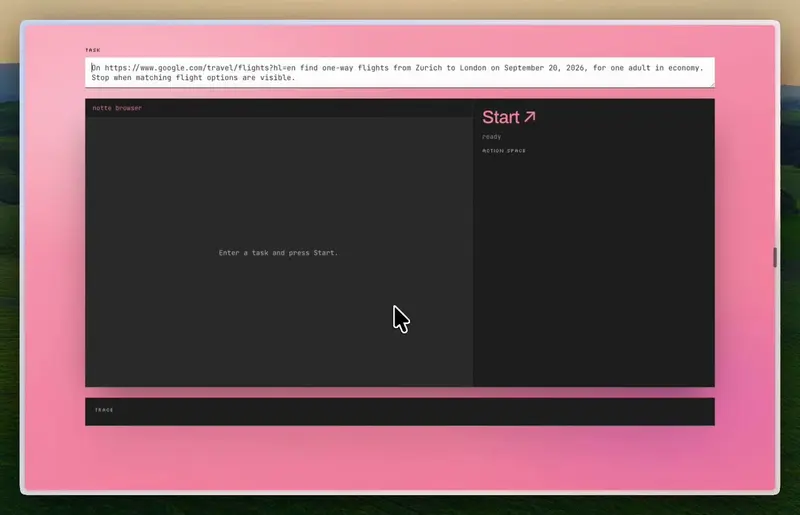
Jev picks every action for a Notte cloud browser session over CDP, choosing from a fresh action space at each step with a replay of every decision.
A zero-dependency library that prunes large tool schema catalogs down to top candidates in 0.4 milliseconds, entirely pre-flight and offline, cutting the tokens spent listing tools by up to 92 percent. The author reports 100 percent on Berkeley's FCL v3 benchmark with Jev.
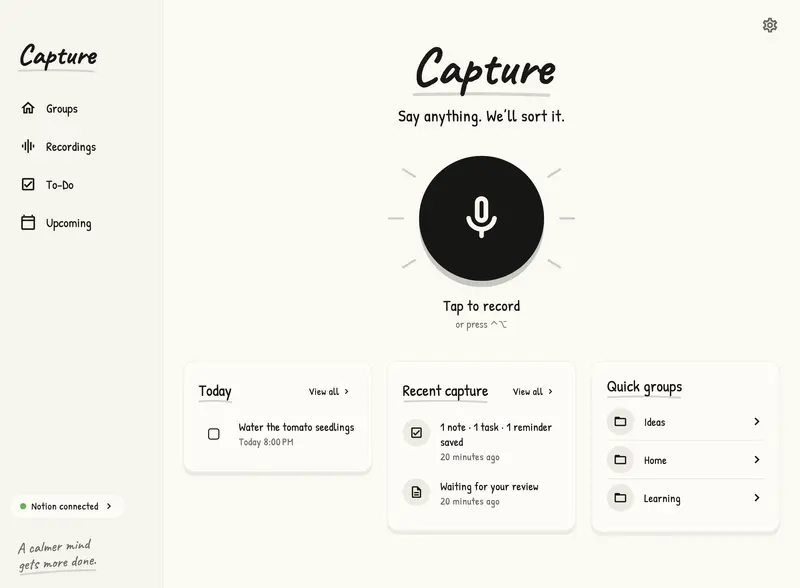
A private Mac voice diary that transcribes locally, uses Jev to sort each entry, and saves them to a Notion library.
Measures how Laya's decision head stops attending to input past roughly 200 tokens, then fixes it by chunking documents into passages and screening each one. Tested on 400 documents, and against Jev on a public needle benchmark.
An MCP server that hands small coding-agent decisions, such as which file to edit or whether a diff breaks tests, to Jev instead of spending reasoning tokens on them. Works with Cursor, Windsurf and Claude Code.
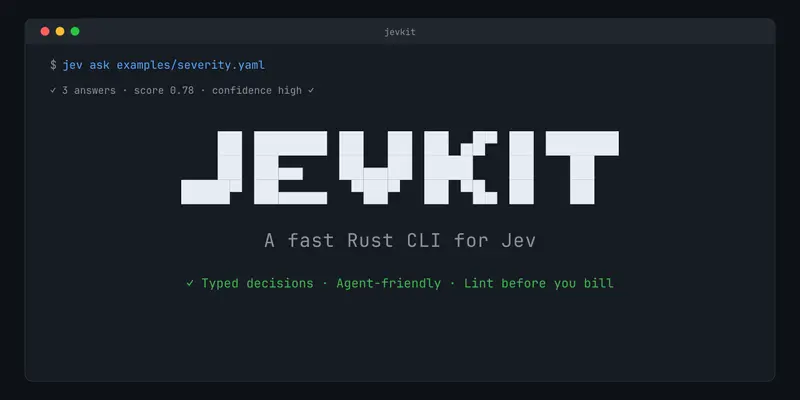
A Rust CLI for Jev with a built-in linter that checks your questions before you spend a call on them.
Dispatches natural-language requests to MCP tools using only Jev, with no general-purpose LLM in the loop. It reads a server's tool signatures at runtime and uses Jev's Choice and Noul primitives to pick the right tool and pull its arguments out of the sentence.
A single-file input moderation plugin for Mastra agents, running on Jev.
SQLite extension that calls Jev straight from SQL through jev_noul, jev_choice and jev_score, so a whole table can be classified in one query. Written in C, depends only on libcurl, and builds on Linux, macOS and Windows.
A local desktop and CLI coding agent where Jev selects the next tool from the user's request and recorded execution results, while DeepSeek or a local model supplies the arguments.
AI SDK middleware and OpenAI-compatible proxy that judges every LLM response before the user sees it, running seven Jev checks in one call of about 100 ms. Policy is YAML, a high-confidence check blocks while a low-confidence one downgrades to a flag, and the author notes there are no accuracy numbers against real Jev yet.
Unofficial Laravel 12 and 13 integration on top of the community PHP TypeSafe SDK, adding package discovery, scoped lazy dependency injection, config, a facade and a recording fake. Keeps the SDK's typed DTOs, promises and exceptions.
CLI and agent skill for TypeSafe System One exposing typed Choice, Score and Noul judgments from the terminal.
Agent skill that sends closed coding-agent judgments to Jev and acts on the probabilities. Jev answers yes/no, choice and score questions in about 250 ms, so the agent interrupts the user only when a person must decide, and stops before a command that could destroy data or leak secrets.
CLI for the Jev evaluation model: typed questions in, structured JSON answers out.
Pi extension that exposes System One judgments as five tools: a yes/no Noul, a Choice over a fixed set, a Score over ordered levels, a batched evaluate for several questions about one state, and an ask for a question pinned in a local YAML or JSON file. The tools call the API directly with fetch and carry no SDK dependency.
Stop hook that keeps a coding agent from finishing early. You write completion rules in plain language, and every time the agent is about to stop, Jev scores the stop against each rule in 0.7 seconds and sends it back to work if a rule is violated. Works with Claude Code and Codex.
Rust SDK for the TypeSafe AI API. Types the three answer kinds with accessors that fail loudly on the wrong kind, carries usage and request_id, and offers async and blocking clients.
Nothing matches those filters
Clear a filter to widen the search, or send us the thing you were looking for.


