 Play the video (opens in a new tab)
Video on YouTube by AISeeKing
- Views
- 16,903
- Duration
- 10:24
Read from YouTube on . Counts change daily.
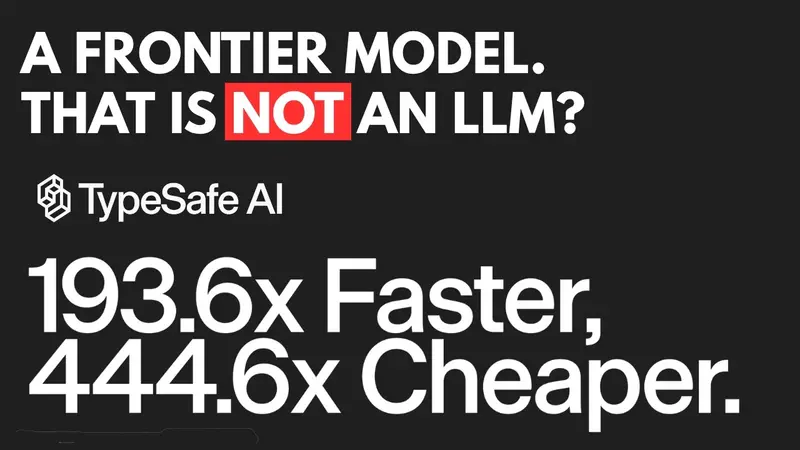
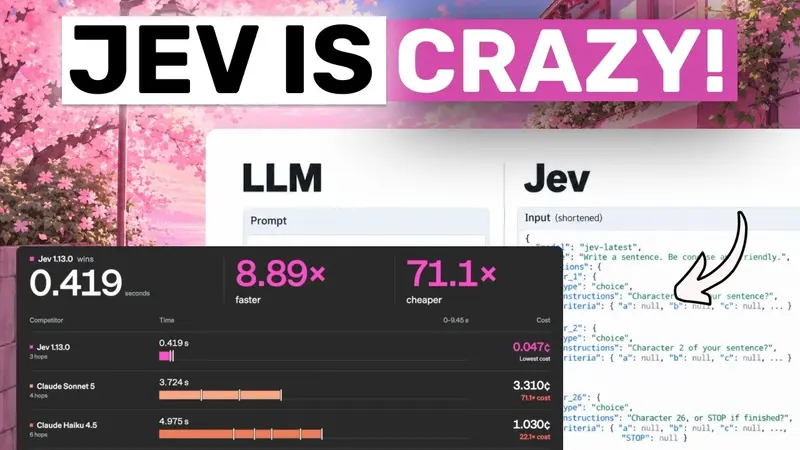
AISeeKing reads TypeSafe’s documentation and published evals and pulls out the numbers behind the headline claims. In TypeSafe’s four-workflow average, Jev agrees with the reference answers 67.8% of the time. GPT-5.6 Terra scores 67.9% and GPT-5.6 Soul 74.1%. The references are themselves frontier-model answers, so this measures agreement, not correctness. Results vary by task: Jev trails Soul on invoice processing (61.8% vs 79.1%) but beats Terra on customer service (76% vs 72.7%). The video also cites an outside test by Every. Jev took a median 0.35 s per passage against 8.83 s for Fable 5.1 at high effort, but caught six of seven planted defects where Fable caught all seven.
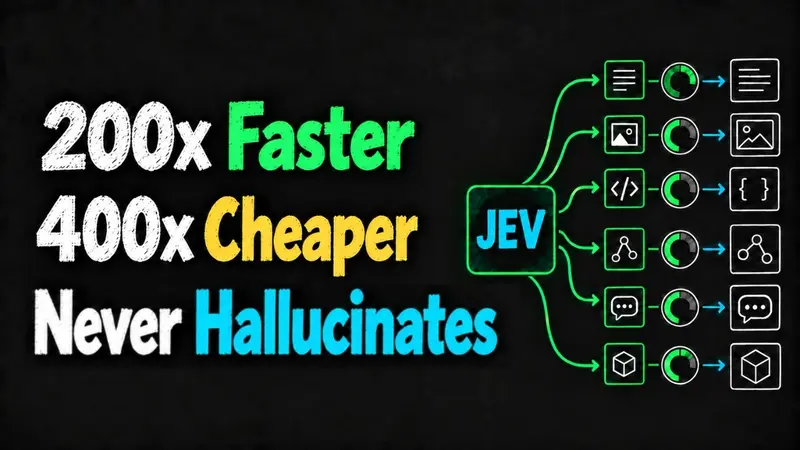
On “zero hallucinations”, the video quotes TypeSafe’s own FAQ: the guarantee covers the shape of the answer, not whether the decision is right. Probability and confidence are separate fields, so a 0.9 confidence does not mean 90% likely to be correct. The cookbook examples show where reliability comes from in practice. Other code finds candidate values, Jev picks one, and validation code catches incomplete or conflicting answers and sends them to review.
Practical details from the docs: asking 13 questions about one document in a single request was about 12 times cheaper than sending them separately. Input is capped at about 32,000 tokens. A choice allows up to 255 options.