 Play the video (opens in a new tab)
Video on YouTube by Syntax
- Views
- 245,336
- Duration
- 17:50
Read from YouTube on . Counts change daily.
CJ from Syntax starts with the basics. Jev is a classifier, not an LLM. You send it your data (the “state”) plus a set of questions, and it returns a probability for each option you gave it. Your own code then branches on the result. He contrasts this with the usual agent pattern of one large prompt asking an LLM for intent, safety and tool choice at once, wrapped in a try/catch because structured output can break or invent fields.
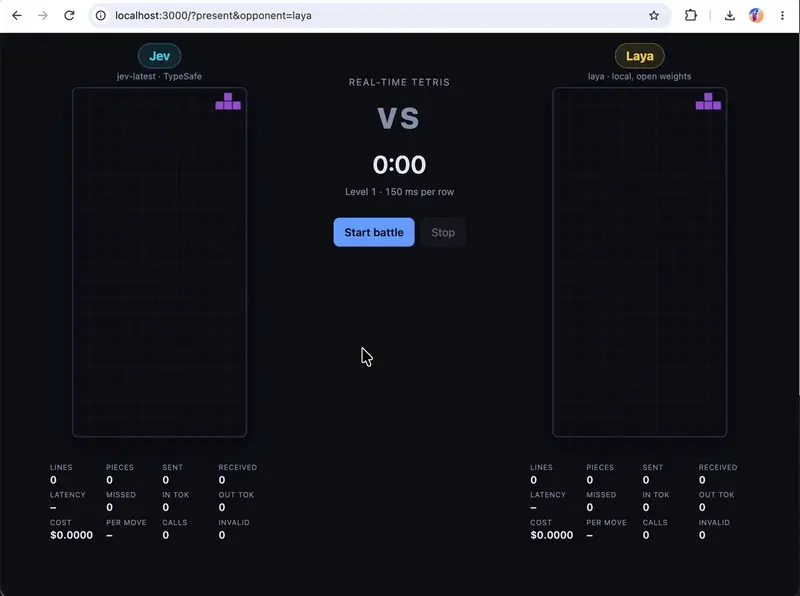
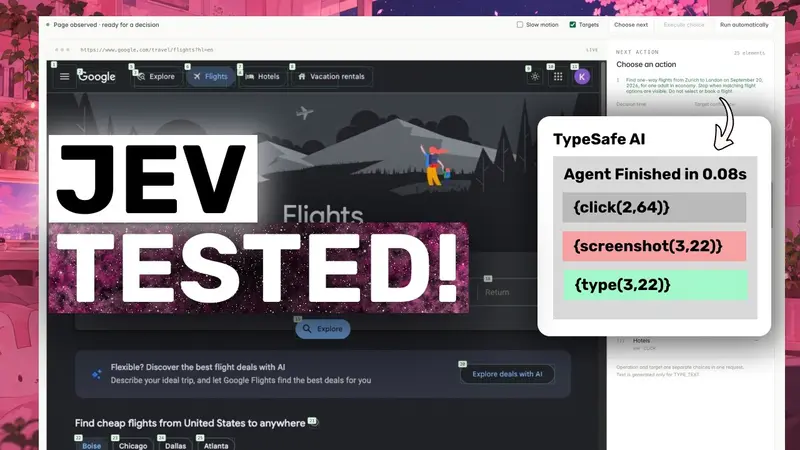
The middle of the video tours what others have built: a browser agent that found flights in 7 seconds, a classifier for over a thousand research papers, resume-to-job matching, inbox triage, a live writing analyzer, an X extension that hides rage bait, a Tetris player and a driving simulator. CJ then shows two uses at Syntax and Sentry. Jev could check each claim in the LLM-written podcast show notes. It could also replace the prompt-based model router in Junior, Sentry’s Slack bot, with two questions: how much reasoning a message needs, and which profile it fits.
The last section is his own chatbot, jev-chat, which uses no LLM. Jev picks the intent, the tool (weather, units, Wikipedia, web search, Home Assistant) and the tool’s arguments in one response, and the code makes the call. He reports about 300 ms for a smart-home command and says answers come back in “200 milliseconds or less”. The code is at github.com/w3cj/jev-chat.