 Play the video (opens in a new tab)
Video on YouTube by Dots and Arrows
- Views
- 15,365
- Duration
- 8:00
Read from YouTube on . Counts change daily.
Explains the autoregressive latency floor set by memory bandwidth per token and how a single-pass architecture bypasses it. Covers the Kahneman framing, calibration and the Jevons Paradox naming.
Play the video (opens in a new tab)Read from YouTube on . Counts change daily.

Walks through the Choice, Score and Noul primitives live in the TypeSafe playground, with speed and cost numbers and their caveats.

CJ from Syntax explains what Jev is, how it works, and walks through several use cases and demos. 17 minutes.

Technical breakdown of schema-constrained output, RLCD, the Doom and Wikiracing demos, and pricing. Lists limits including the 255-option cap on Choice and the absence of public benchmarks or released weights.
85k viewsLatency 70-500 msChoice cap 255 options
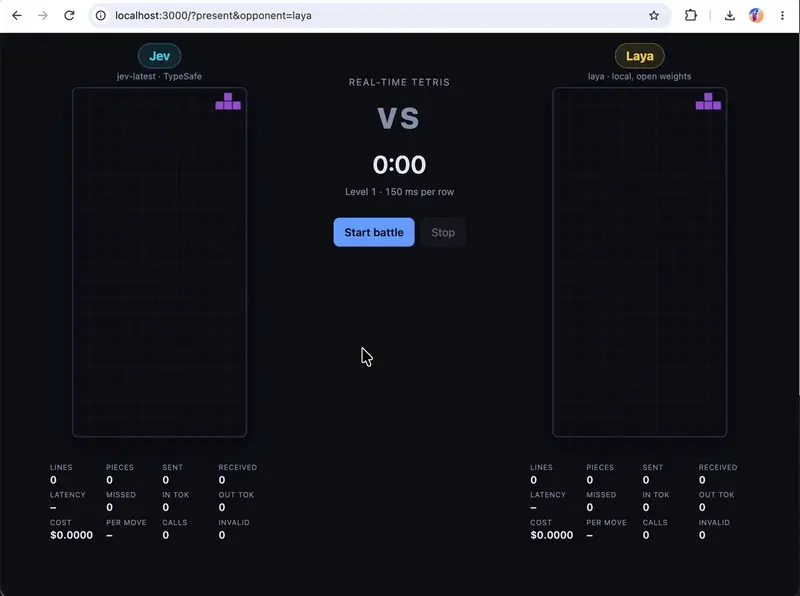
Video Tetris benchmark: Laya-MLX runs fast on a MacBook at about 84ms per decision but loses to Jev in all three rounds.
 Tony Dinh (@tdinh_me)OpenTetris Bench: Jev vs Laya-MLX on x.com
73k viewsLaya latency ~84 msResult Jev won 3/3
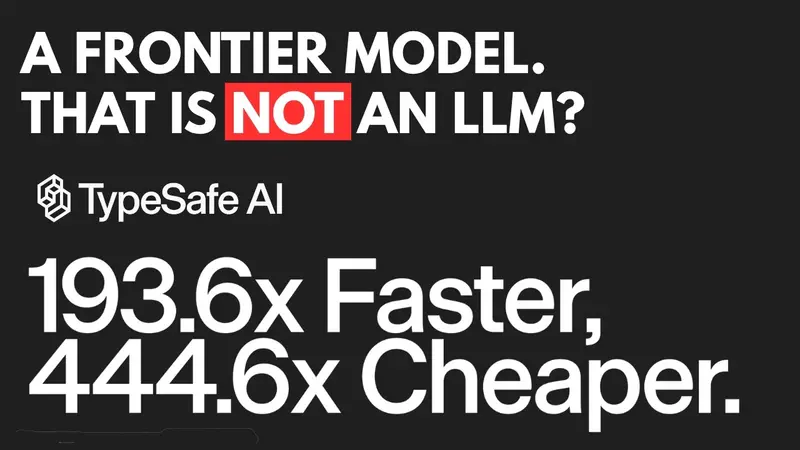
Walks through the launch video, why decision models need to exist, and how they differ from LLMs in use. 15 minutes.

Tests Jev on the creator's own inbox, classifying 100 then 1,000 emails by category, priority, spam and reply-needed at around 200ms average response time. Ends by checking the actual bill.
67k viewsAvg response time ~200 msSpeed claim tested ~200x